Proposed Projects
What the proposed Town Center Development District could help fund—organized by focus, not priority.
Location-specific Infrastructure Projects
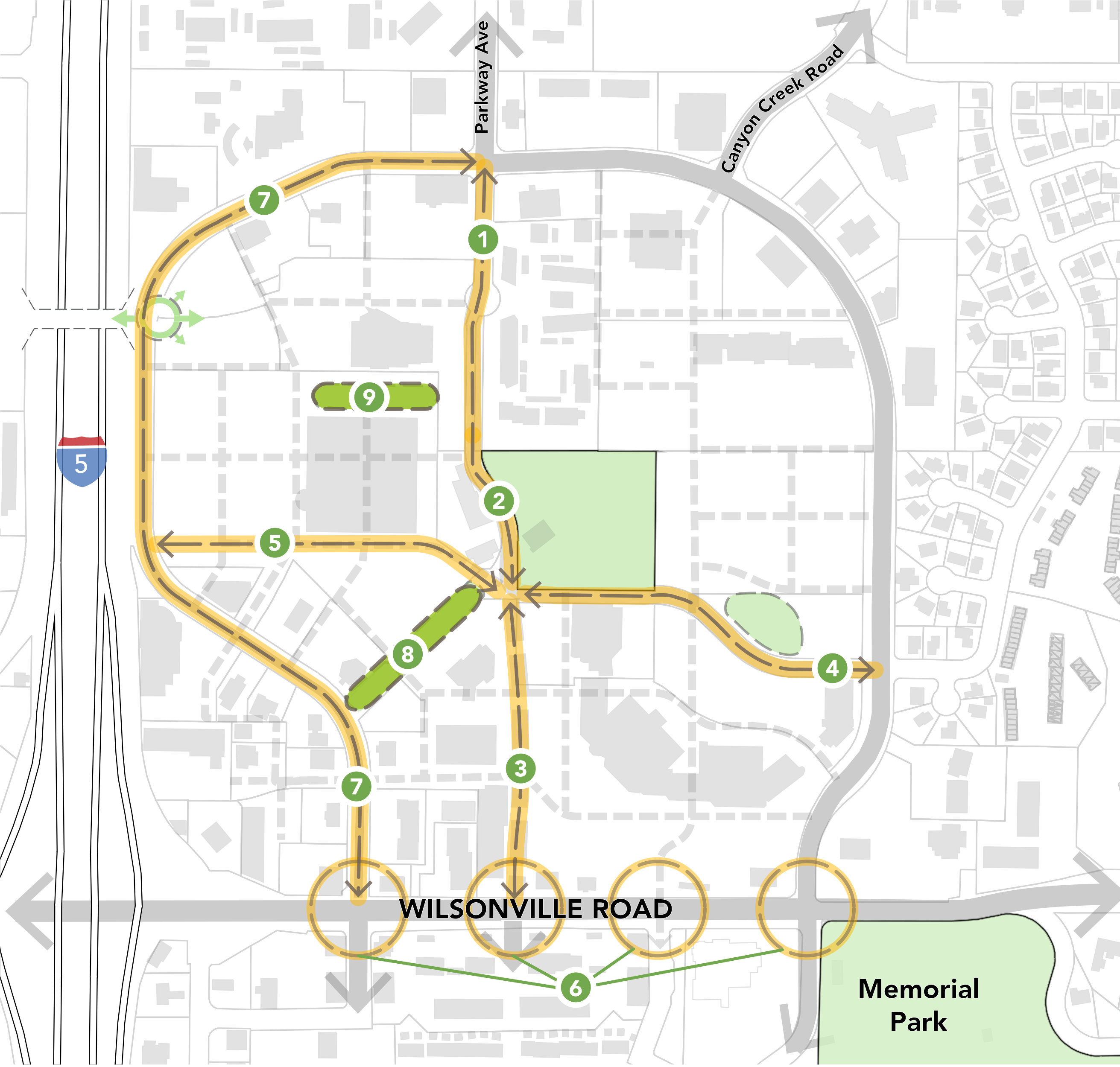
Hover a number to highlight it and its route, or tap one — on the map or in the list below — to read more.
Area-wide Projects
These proposed projects do not have a specific location, or may be implemented in multiple locations across the Area.
10. Local Road Network
Shown on the map above as dashed gray lines. New local streets would improve connectivity and support a more walkable Town Center. The alignments shown are conceptual, with exact locations determined during site planning. While most streets are expected to be built by private development, the Plan allows public participation when construction costs or right-of-way requirements make redevelopment financially challenging. Note: Some conceptual streets appear to pass through existing buildings because they assume future redevelopment. If a property is not redeveloped, that street connection would not be constructed.
11. Underground Utility Relocation
Many existing water, sewer, and stormwater lines run diagonally through parking lots, complicating redevelopment and conflicting with a connected street network. As development occurs, utilities would be relocated and upgraded under new roads. Utility improvements within local streets are generally expected to be funded by private development, although urban renewal funding may help offset relocation costs when warranted. Adjacent development would be responsible for connecting to the new infrastructure.
12. Cycle Tracks
There are several sections of two-way cycle tracks identified in the Town Center Plan. A Cycle Track is an exclusive bike facility that is separated from motor vehicle traffic, parking lanes and sidewalks through the use of bollards, medians, or raised curbs. These provide essential connectivity elements both within Town Center and to the surrounding bicycle and trail network. There are four primary cycle tracks proposed in Town Center that together create a continuous cycle track between the I-5 bike/pedestrian bridge and Memorial Park, referred to as the Emerald Chain.
13. Parking Facilities
This project supports the development of public parking facilities in Town Center, including City-owned parking or partnerships with private development. Parking may be provided as surface lots, structured parking, or integrated into private projects while remaining publicly accessible. The goal is to support future growth by providing convenient parking that complements a walkable, pedestrian-oriented Town Center, with parking located and designed to minimize its visual and functional impact on surrounding businesses and public spaces.
The proposed Town Center Development District includes a food cart pod incentive program
The vision for the Town Center is broader than shops and housing; it also includes uses that bring activity and vibrancy to the area, like food carts. Small food businesses in an accessible location could bring more dining options and community activity to Wilsonville’s Town Center—not to mention opportunity for budding entrepreneurs.
Watch the video to learn more about the vision and what a food cart lot could mean for our community.
Economic Development Projects & Programs
Economic Development Programs and Projects consist of the following activities:
14. Food Cart Pod Incentives
Provide incentives for the development of a Food Cart Pod in the Area. The design of a program or incentive would be determined by the City Council. Urban Renewal funding for this project should fund permanent, required infrastructure, including but not limited to local roads or utility relocations, and/or pay for System Development Charges in whole or in part on behalf of the developer/applicant, which would otherwise be the financial responsibility of the developer of the food cart pod.
15. Real Estate Activities & Site Prep
Urban renewal can support redevelopment of challenging sites through property acquisition, site preparation, and disposition agreements with private developers. These agreements may require public benefits, such as plazas, public parking, or other community-serving uses. Eligible activities include property acquisition and disposition, demolition, grading, land-use approvals, and related professional services, consistent with the Plan.
16. Development & Tenanting Incentives
Provide programs including but not limited to incentives to support existing legacy businesses facing displacement as new development occurs within the Area, as well as incentives to attract businesses the community and Council desire such as restaurants, retailers, and other amenity businesses that market forces alone are not attracting.